When a child is in the middle of a meltdown, it can feel like everything you say is wrong. The truth is, a meltdown is not misbehaviour, it's a nervous system overload. Your child is not giving you a hard time; they're having a hard time. The goal in those moments isn't to stop the behaviour, but to help your child feel safe enough to come back to themselves.
1. Lower your own energy first
Children are exquisitely sensitive to the emotional state of the adults around them. Before you say a word, take one slow breath and soften your shoulders. Your calm is contagious, and so is your alarm. You don't have to feel calm; you just have to act a little quieter and slower than the moment.
2. Reduce, don't add
In a meltdown, less is more. Dim the lights, turn off the screen, lower your voice, and remove any non-essential demands. Resist the urge to explain, teach, or ask questions. The thinking brain is offline; reasoning won't reach it yet.
3. Offer co-regulation, not correction
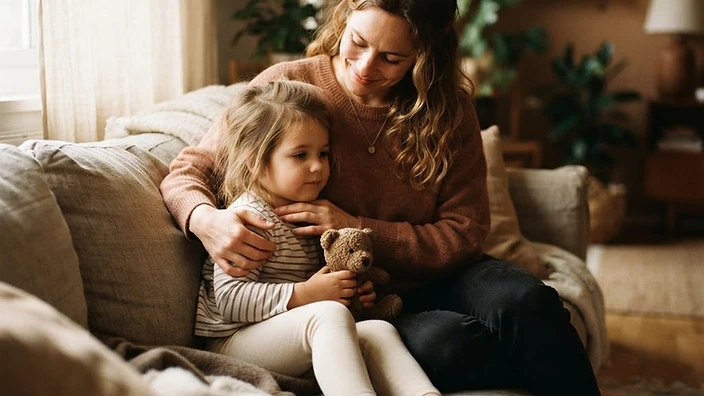
Sit nearby. Offer a steady presence, a hand on the back if welcome, or simply your quiet company. Name what you see gently: 'I'm here. You're safe.' Co-regulation teaches the nervous system, over time, that big feelings can be survived with a trusted adult beside you.
4. Give a sensory anchor
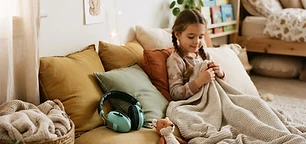
Some children regulate through deep pressure (a tight hug or weighted blanket), others through rhythm (rocking, humming), others through cool air or water. Learn your child's anchors during calm moments so they're ready when things get hard.
5. Repair after, not during
Once your child is regulated, which may take 20 minutes or more, you can gently reconnect. 'That was a really big feeling. I'm glad we got through it together.' The lesson comes later, sometimes the next day, when everyone is rested. The relationship is the curriculum.
If meltdowns are frequent, intense, or lasting longer than feels manageable, you don't have to figure it out alone. Reach out to a trusted professional, your family doctor, a paediatrician, or our team at Dedunola Family Comfort Living. There is no shame in asking for support.