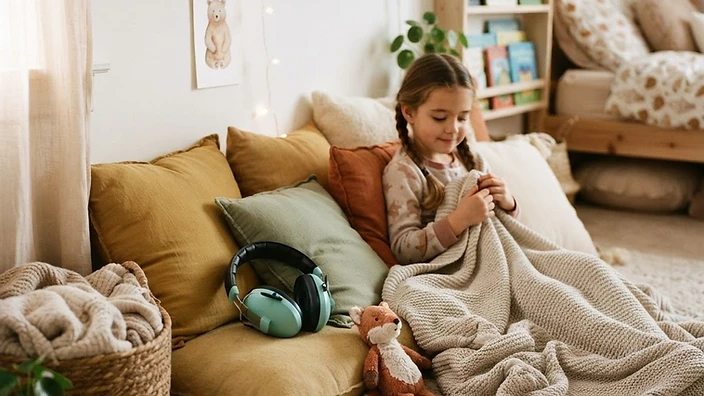
Sensory needs are not preferences or pickiness, they are how a nervous system takes in and responds to the world. For many neurodivergent children, the world can feel too loud, too bright, too fast, or too much.
Notice the patterns
Some children seek out sensory input (spinning, crashing, loud play) while others avoid it (covering ears, refusing certain clothes, withdrawing). Many children do both, depending on the moment. Noticing these patterns is the first step to supporting them.
Small environmental shifts
A quiet corner with soft lighting, noise-cancelling headphones for transitions, a visual schedule to reduce surprise, and predictable routines can dramatically reduce a child's sensory load, at home and at school.
When home and school collaborate around a child's sensory profile, children spend less energy just surviving their environment and more energy learning, playing, and connecting.